
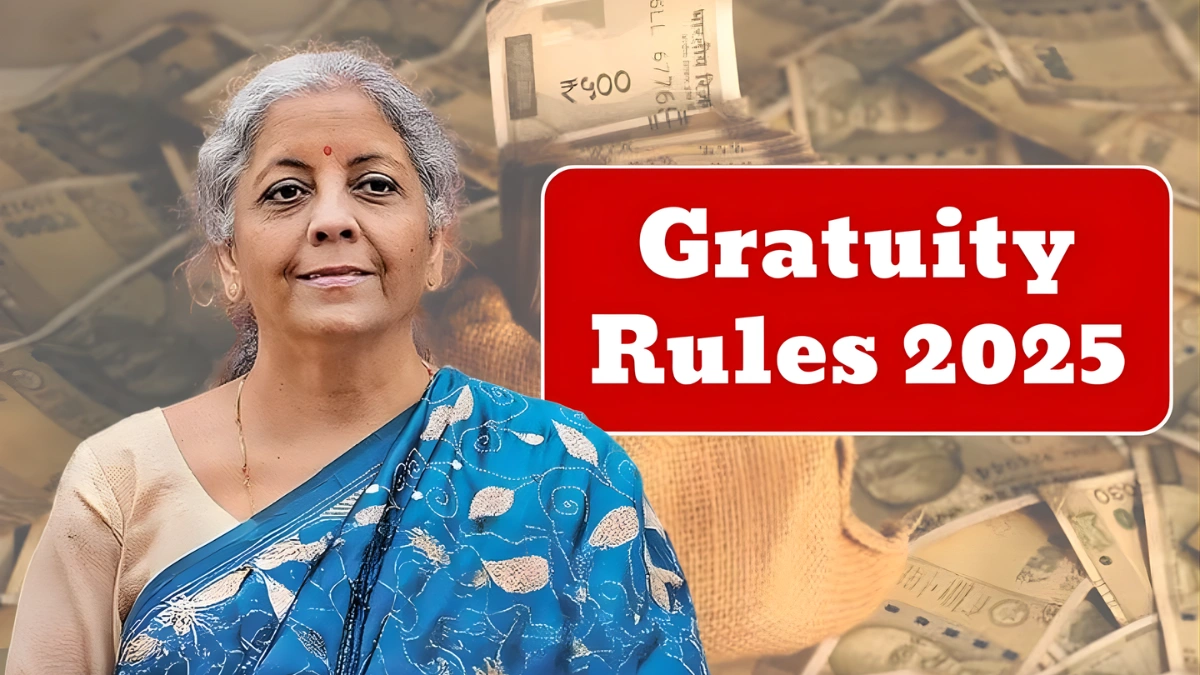
In 2025, the government has updated gratuity rules to provide clarity on eligibility, tax limits, and payout procedures for employees across India. Gratuity is a statutory benefit for employees who have served an organization for a minimum period, ensuring financial security after long-term service. The new rules aim to simplify calculations, enhance transparency, and provide better guidance for both employers and employees.
Gratuity Rules 2025
| Feature | 2025 Update |
|---|---|
| Minimum Service for Eligibility | 5 years (continuous service) |
| Maximum Gratuity Limit | ₹30 lakh (revised from ₹20 lakh) |
| Tax Exemption | Fully exempt up to ₹30 lakh |
| Payout Mode | Lump sum payment by employer or trust |
| Applicability | Employees in private and government sectors |
| Calculation Basis | Last drawn salary × 15/26 × Years of service |
| Effective From | April 2025 |
Eligibility Criteria Under the New Rules
To qualify for gratuity under the 2025 guidelines:

- Employees must have completed at least 5 years of continuous service
- Both full-time and permanent employees are eligible
- Applicable to organizations with 10 or more employees
- Employees leaving due to retirement, resignation, or death can claim gratuity
These rules ensure that long-term employees receive a fair and regulated end-of-service benefit.
How Gratuity Is Calculated
The gratuity amount is calculated using the standard formula:

Gratuity = Last Drawn Salary × 15/26 × Number of Years of Service
Where:

- Last Drawn Salary = Basic + Dearness Allowance (DA)
- 15/26 = 15 days’ salary for every completed year of service
- Number of Years = Rounded up to the nearest full year
The revised maximum limit of ₹30 lakh applies to all eligible employees under the new rules.
Steps to Claim Gratuity
Employees can claim gratuity by following these steps:

- Submit a gratuity claim form to the employer or the managing trust
- Attach employment proof, last salary slips, and service certificate
- Employer verifies the service period and calculates the payout
- Gratuity is paid as a lump sum amount directly to the employee’s bank account
- Employees can also track gratuity through online portals offered by EPFO in certain sectors
Key Points Employees Must Know
- The payout is fully tax-exempt up to ₹30 lakh
- Partial withdrawals are not allowed; gratuity is paid only on completion of eligibility
- Death or disability claims are treated as per the gratuity act rules
- Employers are required to deposit gratuity in a trust or insurance scheme to ensure timely payment
These points help employees understand their rights and ensure compliance with the new regulations.
Benefits of the 2025 Gratuity Rules
- Ensures financial security after long-term service
- Increases the maximum tax-exempt limit to ₹30 lakh
- Streamlines the claim and payout process
- Provides clear guidelines for both private and government sectors
- Encourages employers to maintain proper service records
The revised rules make gratuity transparent, accessible, and aligned with modern salary structures.

Conclusion
The Gratuity Rules 2025 provide employees with clear eligibility criteria, higher tax-exempt limits, and structured payout procedures. With a maximum payout of ₹30 lakh and simplified calculation methods, long-serving employees can confidently plan their retirement benefits. Organizations and employees alike are encouraged to stay updated with these rules to ensure smooth, timely, and compliant gratuity disbursals.