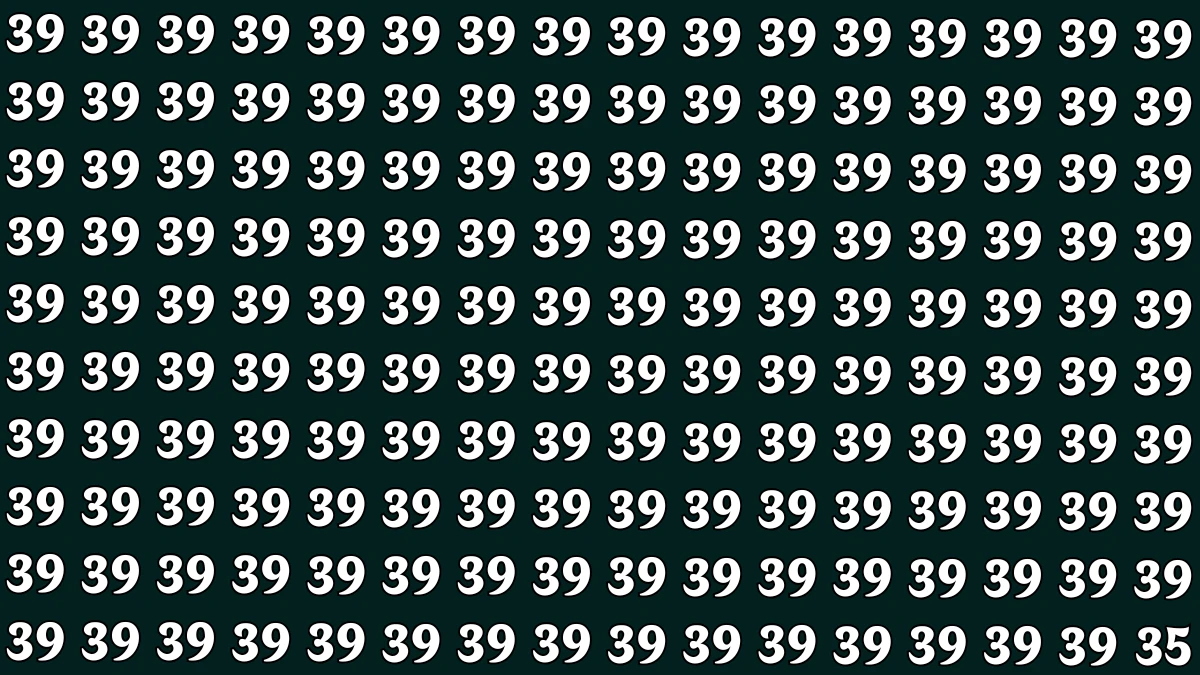
Optical illusion challenges are designed to test how quickly your brain can filter patterns and spot small differences. In this fast-paced challenge, your task is to find the number 35 hidden among multiple 69s in just 6 seconds. At first glance, all the numbers appear identical, making this illusion far more difficult than it seems.
Why This Illusion Is So Difficult
The numbers 35 and 69 share similar curved shapes, which causes the brain to group them together visually. When the same number repeats over and over, your brain switches to pattern mode and stops checking each digit carefully. This illusion takes advantage of that shortcut, making the hidden 35 easy to miss.

How to Find 35 Quickly
The key to solving this illusion is changing how you look at the numbers rather than staring harder. Breaking the pattern is the fastest way to succeed.
Below is the only bullet-point list included in the article:

- Focus on the shape of each digit instead of reading the number
- Scan the image row by row rather than randomly
- Look for straight lines, as 35 has fewer curves than 69
- Relax your eyes to avoid visual overload
- Use peripheral vision to catch pattern breaks
These techniques can dramatically improve your speed.
What Finding 35 Says About You
If you spotted the number within 6 seconds, it suggests strong visual discrimination and quick pattern recognition. These skills are often linked to good attention control and mental agility. Missing it does not reflect poor eyesight. It simply shows how effective optical illusions are at tricking the brain.

Common Mistakes People Make
Most people fail this challenge because they rush and assume every number is the same. Others focus too narrowly on one area and miss the hidden number elsewhere. The illusion rewards calm scanning rather than speed alone.
Table: Skills Tested by This Illusion
| Skill Tested | What It Indicates |
|---|---|
| Visual focus | Ability to ignore distractions |
| Pattern recognition | Spotting irregular numbers |
| Attention to detail | Noticing subtle differences |
| Speed under pressure | Performance within time limits |
Why These Challenges Are Good for the Brain
Short optical illusion challenges activate multiple brain areas at once. They help sharpen focus, improve observation skills, and provide a quick mental workout. Regular exposure to such puzzles can support cognitive flexibility and alertness.

Conclusion
The 35 among 69s optical illusion is a perfect example of how repetition can mislead the brain. Whether you found the number instantly or needed more time, the challenge highlights the importance of slowing down and changing perspective. Keep testing yourself with similar puzzles to keep your mind sharp.
Disclaimer: This challenge is for entertainment and general cognitive engagement only. It is not a medical or psychological assessment.