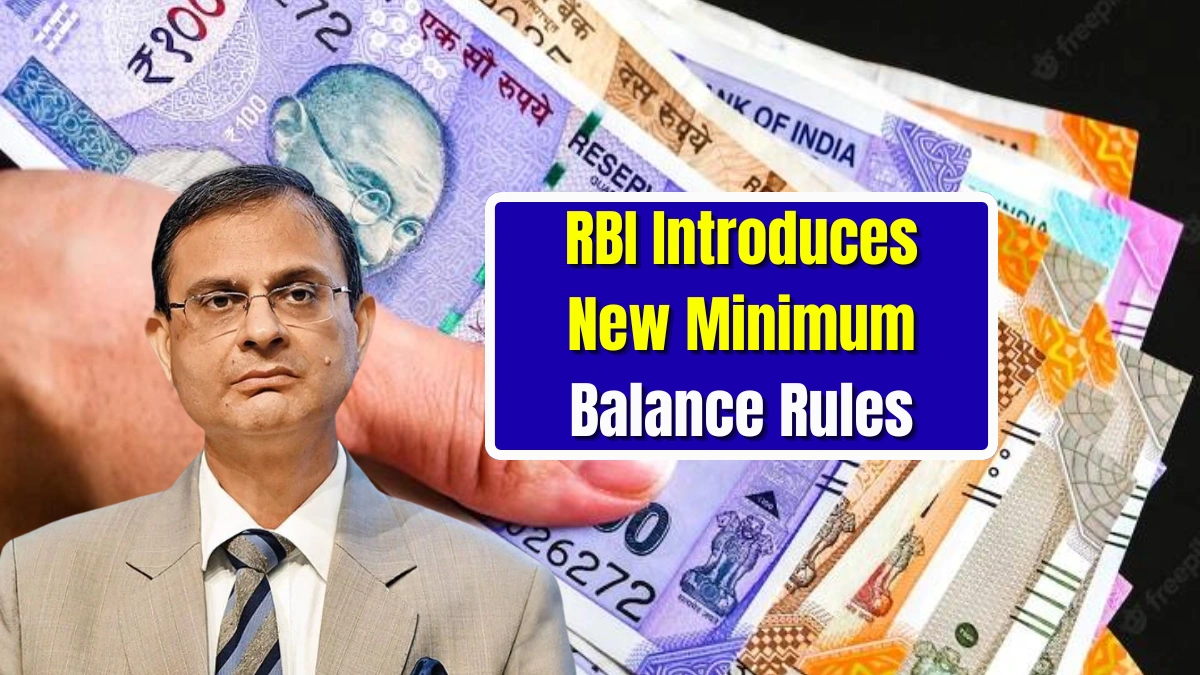
The Reserve Bank of India has officially announced new minimum balance rules for savings and current account holders, set to take effect from December 10. These updated norms are aimed at improving transparency, standardizing penalty structures, and ensuring customers are treated fairly across all banks. With revised balance thresholds, clearer fee guidelines, and uniform communication rules, account holders must stay informed to avoid unnecessary charges or account restrictions.
A Standardized Minimum Balance Framework Across All Banks
Under the new rules, the RBI aims to bring uniformity in how banks define and enforce minimum balance requirements. Customers often faced confusion due to varying thresholds across public, private, and regional banks. The 2025 framework introduces a standardized slab system that categorizes accounts based on features, usage, and risk profile.
The move ensures predictability for customers who maintain multiple accounts and reduces uncertainty for those who frequently shift banks due to job transfers or relocations.

| Category | Updated Rule (Expected) |
|---|---|
| Effective Date | December 10 |
| Minimum Balance | Standardized slabs based on account type |
| Penalty Structure | Transparent, capped charges |
| Customer Rights | Mandatory SMS/email alerts for low balance |
Transparent Penalty Limits to Prevent Excessive Charges
Banks will now follow a stricter and more transparent penalty structure when customers fail to maintain the required minimum balance. Instead of arbitrary or hidden fees, the new rules set an upper cap on charges and require banks to clearly communicate the deduction beforehand.
Penalty amounts must also reflect the actual cost incurred by the bank, preventing overcharging. Customers will receive alerts before any fee is imposed, giving them time to fund their accounts and avoid unnecessary deductions.
New Customer Communication Standards for Low-Balance Alerts
The updated rules require banks to issue timely SMS and email notifications whenever an account falls below the minimum required level. This ensures that customers stay informed and can take corrective action immediately.

The RBI emphasized that silent deductions without prior communication will not be allowed. Banks must also share clear information about balance requirements at the time of account opening, ensuring transparency from day one.
Revised Balance Requirements Tailored to Account Categories
The new minimum balance norms categorize accounts into regular savings, premium savings, digital accounts, and current accounts. Each category will have clearly defined balance limits suited to the services and privileges offered.
For example, digital-only accounts may have lower balance requirements, while premium accounts with added benefits may require higher thresholds. The structure gives customers flexibility to choose an account type based on their financial habits.

Better Consumer Protection and Fair Banking Practices
One of the key goals of the new rules is to protect customers from unfair banking practices. Strict monitoring will ensure that hidden charges, frequent penalty deductions, or unclear account terms do not burden account holders. Customers can also escalate grievances if they feel penalties were imposed wrongly or without proper notice.
Banks must maintain transparency in their fee schedules, display updated rules prominently on their websites, and follow the RBI’s fair banking code at all times.
Why Customers Should Review Their Account Type Before December 10
As the new rules take effect, customers are advised to review their current account category, understand the new balance thresholds, and realign their monthly finances accordingly. Those who maintain multiple accounts should check for inactive or low-balance accounts that may attract penalties under the revised norms.

Taking action early will ensure compliance and help avoid unnecessary charges once the rules become active.
Conclusion: The RBI’s new minimum balance rules mark a major step toward transparent, customer-friendly banking in India. With standardized balance slabs, capped penalties, mandatory alerts, and improved communication standards, account holders will experience greater clarity and fairness. As the December 10 deadline approaches, customers should stay informed and update their account usage to align with the new requirements.
Disclaimer: The information in this article is based on expected policy updates, RBI guidelines, and early interpretations. Customers should verify exact details with their banks for full accuracy.